Thursday, February 26, 2015

Homeless Child Experiment


In Spanish class, we were shown this video as an example of how we can be kind to one another and emphasize the ideas of random acts of kindness. The second I saw this video, I thought of how it relates to foster care. This video does deviate some from foster care, but by definition a foster child is a child who is not raised by his/her natural or adoptive parent, or a needy child. A homeless child would be considered needy. Many of the children in foster care end up on the streets by the time they are 18. Every year, 20,000 kids age out of foster care. Many youth who have run away had involvement with the foster care system. One of the main categories under the reasons that kids run away in family instability. In 2005, close to 11,000 foster youth had ran away from their placement. 40% of homeless people had spent time in foster care. 
Homelessness in foster care shows how reforms need to be made to better prepare those who age out of the system for independent living. Their main option should not be to become homeless. Furthering education should be an option so that they can have the opportunity to live like everyone else. Also, better background checks on foster families need to be done so that kids may be less likely to want to run away. Ways to make kids feel more comfortable in foster homes need to be found, so the amount of homeless children from foster care does not increase. 
What amazed me about this video is that the only person who stopped to help was another homeless person. He gave all he had to that kid by giving him his jacket. The man said how the homeless people had to stick together and how they had to help each other out. This could be the same thing that occurs in foster care. Foster kids stick together and work to help each other out. That is why so many of the foster care reforms are being driven by former foster kids. They want to fix the problems they faced in their experience in foster care. 
The situation in this video shows what many foster children or kids who have aged out of the foster system could face. Homelessness is an issue that needs to be further solved, along with the consequences of abandoning or aging out of the foster care system. 

Friday, February 20, 2015

Alaska Youth Call for Reform

I found this story of a recent attempt to reform the foster care system in Alaska. On Tuesday, February 17, members of the Alaska Youth Policy Summit met with legislators to share their stories of childhood trauma. The Alaska Youth Policy Summit is an advocacy group that recruits young people to talk to legislators about what they believe the problems in the state's social services system are.  This was part of the annual visit this group has to the state Capitol in order to give voice to children who are in the social services system. There were 5 presenters for this particular cause. The presenters talked about dealing with drug abuse, mental health, and being moved from place to place.

 Robin Ahqupuk is a 20 year old from Anchorage who was part of this summit. He spent 15 years in foster care and lived in 48 different homes. He wants to make sure that other Alaskan children will not have the same experience as him. He recalls how he felt like a loner and was never connected with people. He believes that the system makes children grow up too fast.

Benjamin Dahl-Rouzan is a 17 year old from Anchorage who was another presenter. He remembers dealing with multiple case workers and having to say you were doing one thing when you were really doing another. He was adopted at the age of 10, but not without spending 5 years in foster care first.

One of the main targets of the summit was the workload of caseworkers. Both boys agreed that lessening the burden of caseworkers was an improvement that needed to be made. Representative Les Gara introduced House Bills 27 and 28 in this summit. He says that, "Alaska is failing its foster youth. The state is its legal guardian; we need to treat them as we would treat our own children." Gara   understands the problems with the foster care system because he spent 12 years in it himself. He says that his experience was positive, but it did have its faults. The foster care system is declining because the social work staff is overburdened. His legislation is woking to keep foster children in the same school after moving to a different home. This would create a sense of permanency for the children. He also believes that children should be placed in a permanent home within 18 months of being in foster care.

The number of kids in foster care has increased in recent years. This is leading to caseworkers having to take on more work than one can reasonably handle. House Bill 28 proposes a $500,000 grant to support the staff of the Foster Care Independent Living Transition Program. This program currently has 6 caseworkers helping 300-400 older youth transition to adulthood. The department of Children's Services has not taken a position on the new legislations yet because they are uncertain that the new mandates on the department will be effective.

Below is a picture of Benjamin Dahl-Rouzan sharing his story at the meeting.

Friday, February 13, 2015

Foster Care Foundations

For the community outreach part of my project, I decided to make some kind of donation to a foster care organization. I started researching some of the different organizations there are. I have not decided who to donate to. These are a few of the projects that I found so far in my research. I do not know if I am going to donate to any of these projects or a different one. These are just a few that seemed to be interesting.
The first one is the Care Package Program through Foster Care to Success. This is a program that collects care packages to send to foster kids in college. The students receive three packages a year to help them feel like other college students who receive packages from home. They send out about 7,500 packages a year. Some of the items donated are school supplies, snacks, beach blankets, clothing, and more.
Another Foster Care to Success project is the Red Scarf Project. It stems from the Care Package Program. They collect handmade red scarves throughout the year that can be sent to the college students in a Valentine's Day care package. They have delivered over 20,000 scarves over the last 10 years.

This next project is not really one I am planning on donating to, but it is an interesting concept. It is the Project Meet Me Halfway. This was started in 2009 by country singer Jimmy Wayne. The purpose is to raise awareness to the youth aging out of the foster care system and not having the tools and support they need to be successful in life. Wayne felt guilty because he had been living a comfortable life, having toured with Brad Paisley for most of the year. He felt as though he didn't do anything to make a difference. He started this project the next month which consisted of walking halfway across the country (Nashville, TN to Phoenix, AZ) in the middle of winter to raise awareness for the kids who have aged out of the system and cannot live a comfortable life.

The third project is held in a foster care organization closer to home, The Butler County Children and Youth Agency. It is their Duffel Bag Project. The organization creates duffel bags so that children are not collecting personal items in black garbage bags and so that they have some personal items to take to their new home with them. They have a list of recommended items separated by age group that need donated to be placed in the bags so that they can be given to kids to lessen the trauma the child is going through. They also accept monetary donations. It takes about $50 to create one of the bags, but they accept any level of donation. This is the link to the brochure that has what type of items they need: http://www.butlercountyfostercare.com/upload/Duffle%20Bag%20Brochure%202013.pdf

The next interesting project was the Forgotten Child Campaign. The purpose is to help improve the future of a child in foster care. Statistic show that children in foster care are twice as likely as veterans of the first Gulf War to experience PTSD. Their goal is to help foster kids be able to have a successful future once aging out of the system. Some of the projects this campaign recommends is the Porch Light Project, a project that works to reform public policy so that all kids will grow up in a safe home, the Allegheny County Music Festival, which can always use donations, Project Prom, which provides formal attire to eligible high school students, or Running for Laptops, which raises money to provide laptops to disadvantaged kids who are attending college.

The last project is Project Linus. This is a non-profit organization that provides homemade blankets to children in need. One way to donate to this project is to give money. Another way is to be a "blanketeer" and  make a blanket and take it to one of the drop-off sites. The blanket can be any size and any style. They would just like a new, handmade, washable blanket. Their overall goal is to provide security through blankets.

Thursday, February 5, 2015

Foster Care on TV

Foster care is a real life issue that people believe looks good in a TV plot. There are many shows and movies that have characters in them that were part of the foster care system. This week, I wanted to focus on two popular TV shows that I am currently watching.
The first show I want to focus on is The Fosters, which airs on ABC Family. The Fosters focuses on a multi-cultural family headed by a lesbian couple. Four of the five kids in the family are foster kids that they have either adopted or are living with them. The show touches on issues like abuse by foster parents and the messy emotions children can have about their biological parents. Two of the foster kids, Callie and Jude, are taken in after being removed from an abusive home. The twins, Mariana and Jesus, have a biological mother who Mariana stays in contact with in the first season. Her mother is a drug addict who Mariana financially supported by selling Jesus’s ADHD pills. Coming together as a blended family is a major theme in this show.
Because the show is called The Fosters, the factual basis of the show has been analyzed. The show ignores many realities of foster care. It does not show all of the work behind being a foster parent or how often families interact with Child Welfare. The show does show many situations that could occur in foster care, but does not show how they would be reported to Child Services. One main complaint is the parenting in the show. People criticize the hands-off parenting of Stef and Lena, which contradicts typical foster parenting, which is more active and hands-on. The children in the show are also too unsupervised. Many states have rules that foster kids cannot be out alone, and if real foster parents were supervising their kids the way Stef and Lena do, their house would be shut down. Though not completely accurate, the show does shed light on some of the serious issues in foster care, including racial diversity, older children and siblings in foster care, adoption from foster care, and the frequency of placement changes.


Another show that contains characters who were foster children is Once Upon a Time. The show does not focus on or revolve around foster care, but the main character of the show was a foster child, and this can be seen in many flashbacks to her childhood. Emma, the main character and savior of Storybrooke, grew up in foster care. She also put her own son up for adoption so that he could live a life better than she lived. Growing up in foster care caused Emma to rely on herself, which causes her to block everyone out so they do not become close enough to let her down.
Once Upon a Time is said to put a negative light on foster care.The show portrays foster care and adoption as not being a solution. Emma had a very negative foster care experience. Emma describes the parents in foster care as only doing it for the money, which is a real-life issue in foster care. The show had Emma bouncing from home to home, and then once aging out, turning to a life of crime. Though negative, these are still major issues that can result from foster care. People are angered by Emma’s negative experience in foster care, believing it makes the system look terrible as a whole. The truth though is that many of the situations Emma went through are true issues that do result in foster care. Though they are not the only outcomes, they are the ones that people still need to look towards changing. The show also constantly points out that Henry’s adoptive mother is not his real mother. The show does, however, show Regina, Henry’s adoptive mother, constantly saying that she chose to adopt Henry and look after him regardless of whether she is biologically related to him or not. Though foster care is not always accurately portrayed on TV, the plots surrounding it do bring awareness to the real issues of foster care and how the kids in it are affected.


Friday, January 30, 2015

Sex Trafficking Source

The United States foster care system has become a supply chain to traffickers. Most of the children that are being bought and sold for sex in our country are foster care children.The children in foster care are targeted by traffickers because of their need for love, affirmation, and protection. They are trained to call sex traffickers "daddies." This is a perverted reflection of the family unit the children are seeking. This is a scary idea that people are taking advantage of kids who already have some problems in their life.
Between 50 and 80 percent of commercially sexually exploited children in California in 2012 are or were formally involved with the child welfare system. In Los Angeles County's STARS court, 58% of the 72 sexually trafficked girls were foster care kids. 60% of the children reported missing in 2010 were in foster care or group homes before they ran away. In 2013, 60% of the child sex trafficking victims recovered as part of a FBI nationwide raid from over 70 cities were children from foster care or group homes.
Foster care has became the training ground in the country for being bought and sold for sex. Many of the kids in foster care are vulnerable to becoming sexually exploited. Sex traffickers have no fear of punishment because there is a lack of attention towards foster kids that go missing. Foster kids are used to kids who control their lives and they are not used to having true relationships or attachments.This is because they accept and normalize the idea of being used by people who are supposed to care for them as an object of financial gain. The "nothing but a paycheck" theory is the reason that foster youth normalize the idea of being used for financial gain. When they are taken into a neglectful home, they begin to believe their purpose is to bring income into a household. They do not recognize the difference between the idea of bringing in money for their foster parents and bringing in money for traffickers. Foster kids are also accustomed to moving between multiple homes, so they easily adapt to when a trafficker moves them multiple times as well. Most victims of human trafficking experienced sexual abuse growing up. It is 28 times more likely that a victim of sexual abuse will be drawn into trafficking than those who were not abused.How they are treated in foster care resembles how they are treated in trafficking.


Above is a picture of Withelma "T" Ortiz Walker Pettigrew. She is a survivor of child sex trafficking. She was born into the foster care system and stayed in it for the first 18 years of her life. She spent 7 of those 18 years being sexually trafficked on the streets, Internet, strip clubs, massage parlors, and in the back of express papers. She experienced trauma within the foster care system and previous to it, which allowed her to become more vulnerable. She was one of the kids who has normalized the idea of being exploited for financial gain. She says that even though it's tough to admit, the most consistent relationship she ever had in care was with her pimp and his family.


 In order to help this issue, there needs to be better safety in foster care. There has to be better protocols to screen foster parents and their families, funding for group homes must be re-evaluated and monitored, and children in care who are abused cannot be punished for disclosure. The Preventing Sex Trafficking and Strengthening Families Act was created in 2014 in the House of Representatives. It makes critical reforms to foster care laws. The main goal is to work to identify kids most vulnerable to predators and take steps to protect them from abuse. The bill increases the reporting requirements for foster parents and child welfare agencies. It encourages the identification of at-risk youth and develops ways to ensure better information is provided to caseworkers assigned to these children. The bill also addresses the current, strict foster care policies, and works to lessen the limits placed on these kids in regard to common activities that are part of transitioning into adulthood. The strict rules can cause kids to become isolated and separated from family and friends, which makes them more vulnerable to victimization.
There are also organizations that accept donations that work towards this issue. One of these organizations is My Life My Choice. This is a survivor-led organization that works to overcome the commercial sexual exploitation of children. They offer survivor-led services such as providing training, prevention groups for vulnerable children, survivor mentoring to children who are victims of commercial sexual exploitation, and advocacy and leadership development.
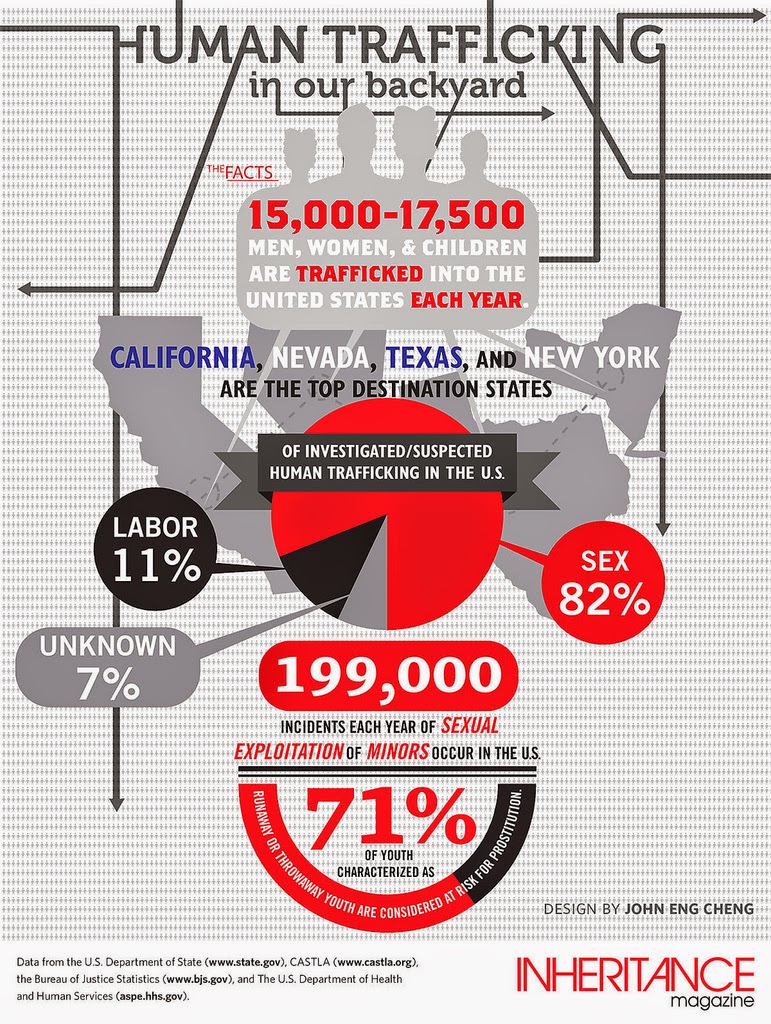
The sexual exploitation of the already vulnerable kids in foster care is an issue that does not receive the attention it deserves. They do not deserve to be used in this way just because they do not have a solidified family. There are many organizations and groups speaking out to help these kids. Below are just a few facts about sex trafficking.


Friday, January 23, 2015

Foster Care to Fame

Being in foster care does not mean a person is automatically set up to have a bad life. It does not mean the person will never go to college, will never have a decent job, or will never be accepted in society. In fact, there are many famous people that society looks up to that have been fostered or adopted. There are more celebrities that were fostered than I even realized. Here is a compilation of some foster kids who have gone on to do great things.

1. Steve Jobs

Many people know that Steve Jobs, the co-founder and CEO of Apple was adopted. His birth mother was single when Jobs was born. Many mothers who gave birth "out of wedlock" were shamed into giving their babies up for adoption. Paul and Clara Jobs adopted him soon after he was born. His biological mother Jobs to be able to have a life that she knew she would not be able to give him. She wanted him to go to college and become successful. Though Jobs did not graduate from college, he did become successful with the help of his foster parents, who looked out for him even when he was committing a lot of trouble in school.

2. John Lennon
John Lennon grew up to form one of the greatest rock groups of all time, The Beatles. Lennon had a rough childhood, and was sent to live with another family member by the foster system. His father went AWOL while on a naval ship and his mother was unable to care for him. He grew up in the care of his Aunt Mary, and music became a major part of his life in his teenage years. His Aunt actually did not approve of his interest in music. It was his mom, who he did still have contact with, that had bought him his first guitar.


3. Bill Clinton

Bill Clinton, former President of the United States, was born to a widowed mother. His mother traveled to New Orleans to study nursing, and was unable to take Clinton with her. He was sent to live with his grandparents as a child.


4. Dave Thomas
Dave Thomas is the founder of Wendy's. He was adopted at six weeks old. Because of his experience, he created the Dave Thomas Foundation for Adoption.


5. Nelson Mandela
Nelson Mandela was adopted at the age of 9 by Chief Jongintaba Dalindyebo, who was the acting regent of the Thembu people. This occurred after Mandela's father had died.


6. Babe Ruth
Babe Ruth, or George Herman Ruth Jr., is one of the most famous baseball players there are. He was sent into care at age 7. His parents sent him and his sister to orphanages. In the orphanage, Ruth met Brother Matthias and began to learn the sport of baseball.


7. Marilyn Monroe
Marilyn Monroe is one of the most popular movie icons of all time. She overcame many obstacles to achieve fame. She was born to a single mother, who was later diagnosed as mentally insane and had been sent to an asylum. She struggled with not knowing her father. She then spent many years of her childhood in foster homes.


8. James Dean
James Dean is was one of the most popular "bad boys". At the age of 5, his mother passed away. He then was fostered by his Aunt and Uncle on their farm in Indiana.


9. Cher
Cher's early life with her mother was spent mostly in poverty. Her mother became too ill to take care of her when she was just 2 years old, causing Cher to be placed in care. Her grandparents were a major part of her upbringing. She was able to return to the care of her mother once the illness passed.


10. Eddie Murphy
Eddie Murphy is a comedy icon of today. His parents divorced when he was three years old. His father died 5 years later. Eddie and his brother were struggling with his mom. His mother was hospitalized for a period of time, which led to his placement in foster care. Though his experience in foster care was short, it had a major impact on his life. He was in foster care for just about a year, and he credits his experience to the development of his sense of humor and making him realize how important it is to find something to laugh at in every situation.


Fostering kids has also appeared in fiction. Here are the two of the most popular fostered kids in fiction.

1. Harry Potter
The boy who lived's parents were killed one night by Voldemort in the overly popular book/movie series Harry Potter. He was then placed on the porch of his muggle Aunt, Uncle, and Cousin, who became his guardians before his attendance at Hogwarts.


2. Superman

Superman is a popular superhero. Born on the planet Krypton, he was the sole survivor. He was found by Jonathan and Martha Kent on Earth. They rescued the boy and took him to an orphanage, declaring him an abandoned child. They later returned to retrieve the boy. They named him Clark and took him home to raise as their own son.


Friday, January 16, 2015

Abuse In Foster Homes is Real


Jack Mook is a Pittsburgh police detective and Army Veteran. Mook is a committed bachelor. He also volunteers at Steel City Boxing, a non-profit organization that works to teach kids in poverty about the sport. This is where he met brothers Josh and Jessee. He became their trainer and instantly had a connection with them. He knew the two boys came from poverty, and would even take them out to dinner because he said that Joshua was so skinny that he could see his ribcage. The boys would come to the gym multiple times a week to train. Then they stopped. Jack Mook became worried, so he set out to find Josh at school. He picked Josh up one day and said he looked terrible. Mook said, “I got him in the car and he didn’t look good. He just started crying in the car. The kid never cried.” Josh described their home situation to him, explaining how they had slept on the floor for the past six years. Jack and Jessee lived with foster parents who were extremely abusive and neglectful. Josh described his situation by saying that he would sleep his life away and only wake up to go to school. Mook told Josh to hang on and take care of Jessee, and that he would take care of things. Mook became the boys foster parent in an emergency situation after the parents they were living with had a run-in with the police. Mook had been their foster parent for two years, until he decided to go further and adopt them. The boys say he has completely changed their lives. Jessee said that he “feels completely safe,” and Josh said that, “He gave us a childhood. I know we’re going to grow up to be good now.” Mook went on to say that the boys were making him better. When asked what it was like being a parent he said, “It’s the most stressful thing I ever did,” he said, “but when they smile, it releases the stress.”


I really enjoyed reading about this man and kids. I thought it was a good ending for a terrible situation. Besides just being a good story, I liked that it brought awareness to the fact that there are foster parents who abuse the kids they take in. Statistics about abuse in foster care are almost impossible to find, but there are plenty of stories that have made headlines dealing with this issue. The Trenton, New Jersey foster care system has found that 1 in 5 children within their system were abused at a foster home. Budget cuts have led to a high turnover rate for caseworkers. There are not as many caseworkers, meaning that they all have to take in more kids. With the overwhelming amount of work, they begin to become lackadaisical in their care for each kid. They begin to neglect a thorough background check of foster parents and limit the amount of times they check in on the kid after they are placed in a home. Government suggests that incidents of abuse in foster homes is very small, but surveys of children who had lived in foster care say otherwise. Below is a table of the percentage of foster children affected by maltreatment. Some of the numbers may seem small, but maltreatment can have a lasting effect on the kid’s life. Based on the differences between what the government and kids report, the level of maltreatment in foster care has been difficult to gauge.


Just in November 2014, a lawsuit came forward from kids in foster care in California. It is the “Kids for Cash” claim. It is directed towards one of California’s largest private foster care agencies. It addresses how these kids faced physical and mental abuse over a seven year period and how it was covered up by the foster care agency.

“The suit claims the children were "caught in an illegal, abusive, violent, concealed, unconscionable 'kids for cash' operation from 2006 to 2013." It goes on to say the foster children "suffered ongoing, unrestrained, terror, torture, corporal punishment, physical and mental abuse and neglect" at the hands of the foster parents that was "covered up/ unchecked by defendant Interim (Care Foster Family Agency).”

California pays private agencies about $2,000 a month per child. The agencies are allowed to keep as much as 60% for various care purposes, but that was not the case in this situation. This case has not been settled yet, but the groups main goal is purely to bring awareness to the fact that they are not always placed in the perfect home and that some of the agencies are run in a corrupt manner.

Websites about Jack Mook:

http://www.cbsnews.com/news/bachelor-detective-takes-on-case-of-two-pittsburgh-boys/

http://pittsburgh.cbslocal.com/2014/09/25/pittsburgh-police-detective-adopts-two-boys-in-need-of-a-home/

http://www.today.com/news/tough-cop-adopts-brothers-need-2D80172646

https://getfitpgh.com/pittsburgh-cop-adopts-local-boys/

Website about abuse in foster home:

http://www.youthlaw.org/publications/yln/2005/july_september_2005/foster_parents_who_are_they_and_what_are_their_motivations/

http://www.kevinmd.com/blog/2013/12/children-abused-foster-parents.html

“Kids for Cash” Source:

http://www.nbclosangeles.com/news/local/Lawsuit-Claims-Kids-for-Cash-Foster-Care-Abuse--281880151.html