Friday, January 16, 2015

Abuse In Foster Homes is Real


Jack Mook is a Pittsburgh police detective and Army Veteran. Mook is a committed bachelor. He also volunteers at Steel City Boxing, a non-profit organization that works to teach kids in poverty about the sport. This is where he met brothers Josh and Jessee. He became their trainer and instantly had a connection with them. He knew the two boys came from poverty, and would even take them out to dinner because he said that Joshua was so skinny that he could see his ribcage. The boys would come to the gym multiple times a week to train. Then they stopped. Jack Mook became worried, so he set out to find Josh at school. He picked Josh up one day and said he looked terrible. Mook said, “I got him in the car and he didn’t look good. He just started crying in the car. The kid never cried.” Josh described their home situation to him, explaining how they had slept on the floor for the past six years. Jack and Jessee lived with foster parents who were extremely abusive and neglectful. Josh described his situation by saying that he would sleep his life away and only wake up to go to school. Mook told Josh to hang on and take care of Jessee, and that he would take care of things. Mook became the boys foster parent in an emergency situation after the parents they were living with had a run-in with the police. Mook had been their foster parent for two years, until he decided to go further and adopt them. The boys say he has completely changed their lives. Jessee said that he “feels completely safe,” and Josh said that, “He gave us a childhood. I know we’re going to grow up to be good now.” Mook went on to say that the boys were making him better. When asked what it was like being a parent he said, “It’s the most stressful thing I ever did,” he said, “but when they smile, it releases the stress.”


I really enjoyed reading about this man and kids. I thought it was a good ending for a terrible situation. Besides just being a good story, I liked that it brought awareness to the fact that there are foster parents who abuse the kids they take in. Statistics about abuse in foster care are almost impossible to find, but there are plenty of stories that have made headlines dealing with this issue. The Trenton, New Jersey foster care system has found that 1 in 5 children within their system were abused at a foster home. Budget cuts have led to a high turnover rate for caseworkers. There are not as many caseworkers, meaning that they all have to take in more kids. With the overwhelming amount of work, they begin to become lackadaisical in their care for each kid. They begin to neglect a thorough background check of foster parents and limit the amount of times they check in on the kid after they are placed in a home. Government suggests that incidents of abuse in foster homes is very small, but surveys of children who had lived in foster care say otherwise. Below is a table of the percentage of foster children affected by maltreatment. Some of the numbers may seem small, but maltreatment can have a lasting effect on the kid’s life. Based on the differences between what the government and kids report, the level of maltreatment in foster care has been difficult to gauge.


Just in November 2014, a lawsuit came forward from kids in foster care in California. It is the “Kids for Cash” claim. It is directed towards one of California’s largest private foster care agencies. It addresses how these kids faced physical and mental abuse over a seven year period and how it was covered up by the foster care agency.

“The suit claims the children were "caught in an illegal, abusive, violent, concealed, unconscionable 'kids for cash' operation from 2006 to 2013." It goes on to say the foster children "suffered ongoing, unrestrained, terror, torture, corporal punishment, physical and mental abuse and neglect" at the hands of the foster parents that was "covered up/ unchecked by defendant Interim (Care Foster Family Agency).”

California pays private agencies about $2,000 a month per child. The agencies are allowed to keep as much as 60% for various care purposes, but that was not the case in this situation. This case has not been settled yet, but the groups main goal is purely to bring awareness to the fact that they are not always placed in the perfect home and that some of the agencies are run in a corrupt manner.

Websites about Jack Mook:

http://www.cbsnews.com/news/bachelor-detective-takes-on-case-of-two-pittsburgh-boys/

http://pittsburgh.cbslocal.com/2014/09/25/pittsburgh-police-detective-adopts-two-boys-in-need-of-a-home/

http://www.today.com/news/tough-cop-adopts-brothers-need-2D80172646

https://getfitpgh.com/pittsburgh-cop-adopts-local-boys/

Website about abuse in foster home:

http://www.youthlaw.org/publications/yln/2005/july_september_2005/foster_parents_who_are_they_and_what_are_their_motivations/

http://www.kevinmd.com/blog/2013/12/children-abused-foster-parents.html

“Kids for Cash” Source:

http://www.nbclosangeles.com/news/local/Lawsuit-Claims-Kids-for-Cash-Foster-Care-Abuse--281880151.html


Friday, January 9, 2015

Aging Out of Foster Care

What does it mean to age out of the foster care system? Aging out is simply when a child is considered too old for the foster care system to look after them. Basically, they are kicked out to fend for themselves. In many states, this happens when a child turns 18. Many problems are faced when a child ages out. They do not have a family or the life skills needed to make it on their own. Some problems faced by youth who age out include emotional disturbance, illegal drug usage, and involvement with the legal system, which makes transitioning to adult life extremely challenging. By age 26, 4% of youth who had aged out of foster care had earned a 4 year college degree.
Of the people who age out, 65% emancipate without a place to live. Less than 3% go on to college, and 51% are unemployed. In California, less than 0.3% of the state’s population is made up of foster children. However, 40% of people living in homeless shelters are former foster children. In 2012, more than 23,000 young people aged out of foster care because they were considered too old to remain. Also in 2012, the percentage of youth that had aged out of foster care increased to 10% as opposed to 8%, which was the amount in 2003. In 2013, for every young person who aged out of foster care, taxpayers and communities payed of $300,000 in social costs. This means that it costs a total of about $8 billion in social costs to the United States every year.
There are ways that states are looking to help this high number of abandoned youth. Many states have raised the age that kids are to be protected by foster care. They are starting to implement supervised independent living policies for youth aging from 18-21. They are able to re-enter foster care after a period of trial independence if they need further support. The Success Beyond 18 campaign is an effort trying to implement this idea nationwide and make the transition from foster youth to independent adult much more bearable for these children. The goal is to make it so foster youth that fear turning 18 do not dread it as much when the time comes.
Below is a map of the country that shows the extension of foster care (or lack of) depending on the state and how they came to the conclusion of extension. It also gives examples of why Washington extended their foster care system and what is required to continue to be part of foster care after age 18.


Friday, January 2, 2015

Foster Love Project


When a child is taken into foster care, they can be ripped from their house in the middle of the night. They will show up to their new home with practically nothing. Kelly Hughes, a Pittsburgh foster mom, created a project over the holidays that had the goal of making a child’s first night less shocking. She planned to give kids something they could call their own. Kelly and her husband Andrew have fostered seven children. Kids usually show up with clothes that are dirty or too small and not many personal belongings.
A moment that inspired Kelly to start her project was when she asked her biological children to donate a few of their stuffed animals to make the arrival of the kids they were fostering feel comfortable. When it was time for a boy they were fostering to leave their home, he was able to take the stuffed animal with him. She said the boy was thrilled.
Kelly Hughes launched the Foster Love Project. The goal of the project was to provide bags of clothes and personal items that children would receive when they were in a new placement and could take with them when it was time to leave. She believes that it is a really big deal to be able to provide a bit of comfort to the child’s life. Hughes asked for donations on Facebook. She also partnered with the Bair Foundation, which is a foster care agency. Each placement bag being created includes a backpack or small duffle bag, a blanket, a stuffed animal, pajamas, a toothbrush and toothpaste, kids bath soap and puff, and a book. Restaurant gift cards were also being donated. Chick-fil-A donated $1,000 in gift cards. More than 800 people have participated in the project, some even making multiple bags. The Hughes family’s biggest message from this project is that kids are not disposable or forgotten. They are cared about and matter.

Article about it in the Pittsburgh Post-Gazette: 
http://www.post-gazette.com/life/lifestyle/2014/12/16/Making-foster-care-a-little-more-special/stories/201412070071

Thursday, December 18, 2014

Inspirational Story of Aging Out

Mary Brown's Story


Graduating high school is something that many foster kids dream of. It is something that people from permanent families believe is given to them. Most are forced into going to school daily and are given a diploma when it is all done. This is not the case for many foster kids. By the age of 19, only 57% of foster youth have graduated high school. Even fewer ever graduate college, the statistic being at only 5%.
Mary Brown overcame this challenge. One of her most prized possessions is her high school diploma. She believes that it shows that she has fared better than many of those from a similar background. Graduating high school is a big achievement, but Mary Brown is not done. Now she wants to graduate college.
“It’s not easy coming out of foster care,” she said. “It’s not like you can say to your parents, ‘Say, can you pay my rent for six months while I figure out what I want to do?’ ”
Brown was placed into foster care just after she was born. She turned to reading as her main interest in school. Brown was not the perfect student. She would start trouble when she was bored because she finished her work so fast. She ended up moving when she was 12 because her foster care situation was not working. She moved around New York City, spending time in every borough.
Her senior year she learned that she did not have enough credits to graduate on time due to her multiple transfers. Because of this, she transferred again, this time to John V. Lindsay Wildcat Charter School. It offered a curriculum that would allow her to receive enough credits to graduate on time. She graduated in 2006 and then moved to an independent living program for young adults shifting out of foster care. She briefly attended college, but did not find it stimulating enough.
The Harlem Congregations for Community Improvement helped her settle into her own apartment, where she is currently living. She tried college again, but was too exhausted when it came time for class that she dropped out again. Not being able to pay her heating bills in 2014 led to Brown feeling as though her life was stuck. She was referred to the Community Service Society. This agency gave Brown money for food, a monthly metrocard, and enough money to pay the balance due on her utility bill.
She was also encouraged to enroll in college again. Mary Brown is enrolled at Bronx Community College, and is expected to earn her associate degree in 2015.  
The story of Mary Brown shows the struggles foster youth face when growing up and attending high school. She struggled to graduate due to her constant moving and inability to transfer credits. It also shows the struggles faced when aging out of the system. She was not able to live on her own and support herself at first. When she did start to live on her own, money became a problem due to the lack of a college degree. Mary Brown also shows foster youth overcoming this struggle. She is attending college and will be able to make a better life for herself in the future.


Thursday, December 4, 2014

The Children in Foster Care

Foster Children are children of all ages who have been separated from their families of origin due to neglect and/or abuse and are in need of a safe, nurturing home. Most families become involved with the child welfare system because of a report of suspected child abuse of neglect. There are about 400,000 children in the U.S. foster care system. In 2012, 254,162 children entered foster care. The age of children in foster care ranges from infancy to age 18. The median age of children in foster care is 9 years old. The median age of children entering foster care is 6.5 years old, while the median age of children exiting foster care is 8.2 years old. The chart below shows the percentage of children in foster care by age. 
sedec_fig3.jpg
Race and ethnicity of children in foster care is also tracked. From 2003-2012, the percentage of African American children in foster care decreased by 30 percent, while the percentage of white children, Hispanic children, and children of other races increased. The chart below shows the race/ethnicity of children in foster care.

foster-care-race.gif
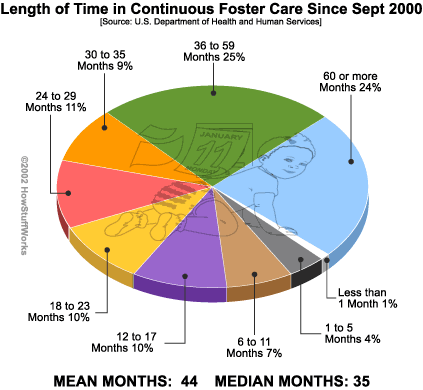
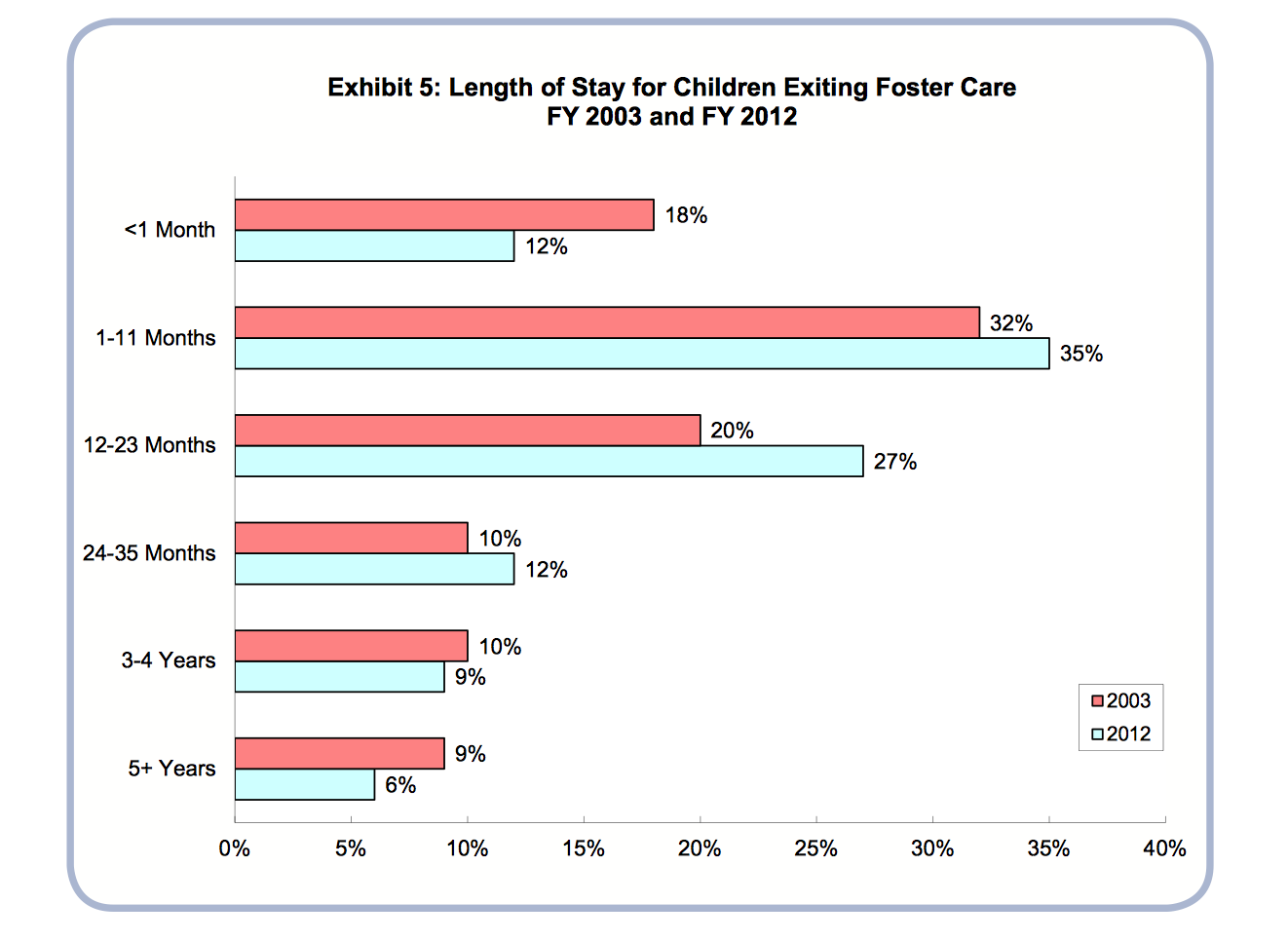
The length of time a child spends in foster care can vary. The median amount of time spent in care in 2012 was 13.4 months. The median amount of time spent in foster care has increased since 2003. The largest increase in percentages were for children in foster care for 1-11 months and 12-23 months. The largest decrease was for children in care for less than a month and children in care for 5 or more years. The charts below show the data from the years 2000, 2003, and 2012 and show the progress made.

foster-care-continuous.gif
Screen Shot 2014-12-04 at 9.00.44 PM.png
Overall, progression toward the decrease in the number of children in foster care has been made. Also, children that do enter foster care also exit sooner.

Sources:


Friday, November 21, 2014

Mental Health in Foster Care

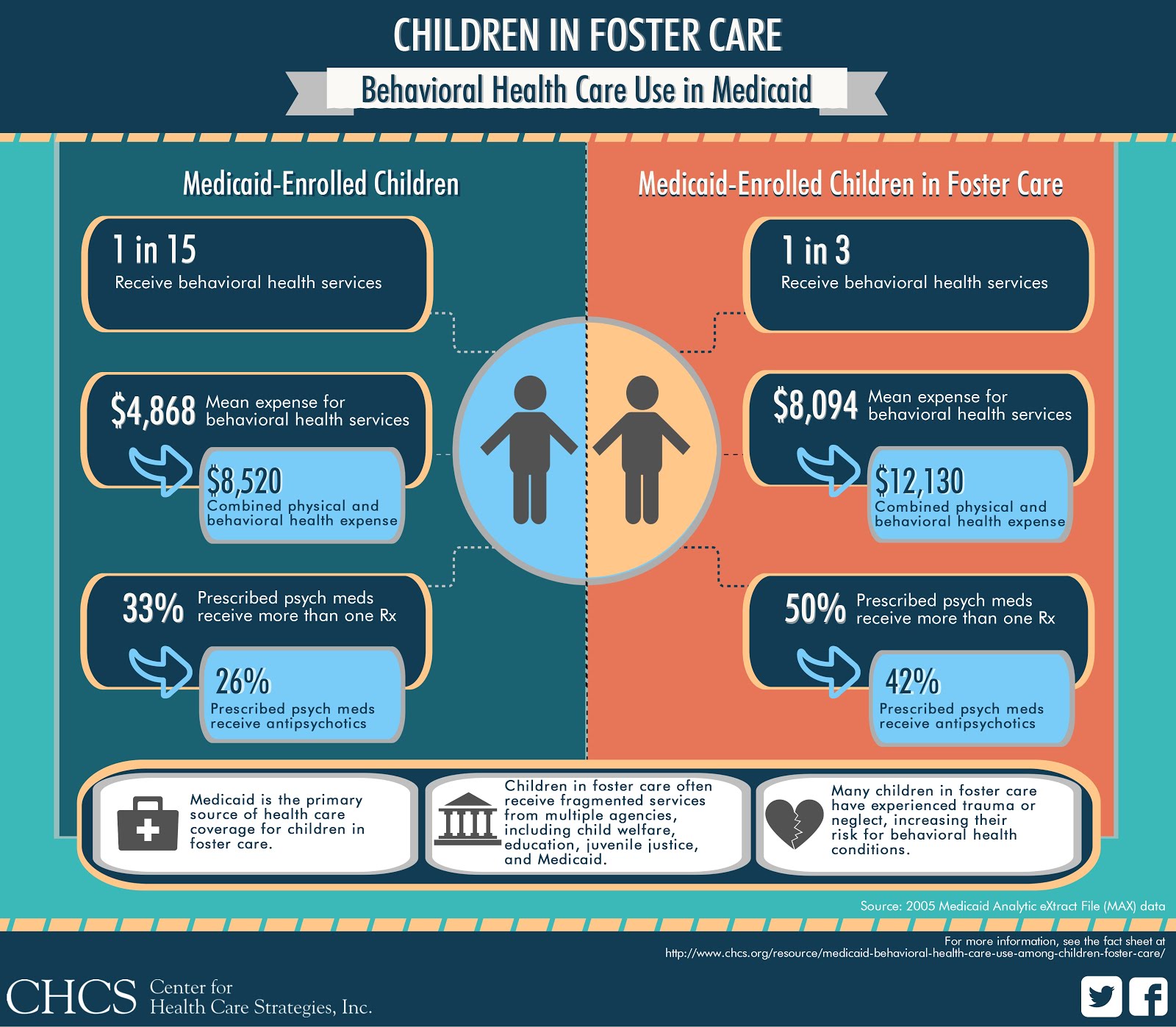
Mental health is the most unmet health need for children and teens in foster care. Mental health requires the presence of a stable caregiver in the child's life. 47.9% of youth in foster care are determined to have clinically significant emotional or behavioral problems. There is also a high rate of psychiatric disability in youth who have aged out of the system. Of the children in foster care for at least a year, only 23% of them received any mental health services. These mental health issues can be caused by past stressors in the child’s life, including repeated abuse, prolonged neglect, or lack of a stable environment during early years of life. One reason there is such a high number of children with mental health issues who are not being treated is the cost to taxpayers. Placement in therapeutic foster care can cost $30,000 or more annually and placement in residential psychiatric care is even higher in cost. Fostering a child can have a significant influence on mental health problems. If the child is raised in a stable home for an extended period of time, severe problems are less likely to occur. Children respond best to being raised in routine environments. There are many charts and statistics on this topic. Many comparisons are made between the treatment of foster care youth versus the non-foster care youth. There is a difference in treatment, foster youth suffer more from mental health problems and are prescribed more medication.


This chart shows the comparison of how mental health issues are covered among kids who are not in foster care in relation to those who are.


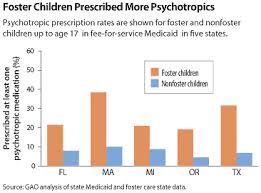
These next two charts show the difference in treatment between foster care youth and the non-foster care youth, focusing on the prescription of antipsychotics and psychotropic prescriptions. The number of foster youth prescribed these medications is much higher than that of the rest of children.


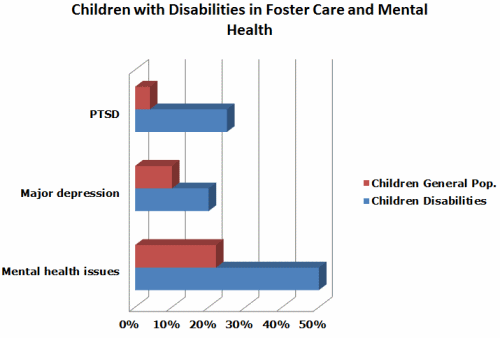
This chart compares the number of disabilities and mental health in foster care (blue) against the general population (red).


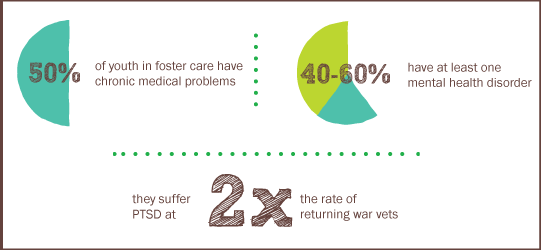
This next chart is just the general statistics about mental health in foster care and how they suffer from PTSD. 50% of youth in foster care have chronic medical problems. 40-60% have at least one mental health disorder. They suffer PTSD at 2x the rate of returning war vets.


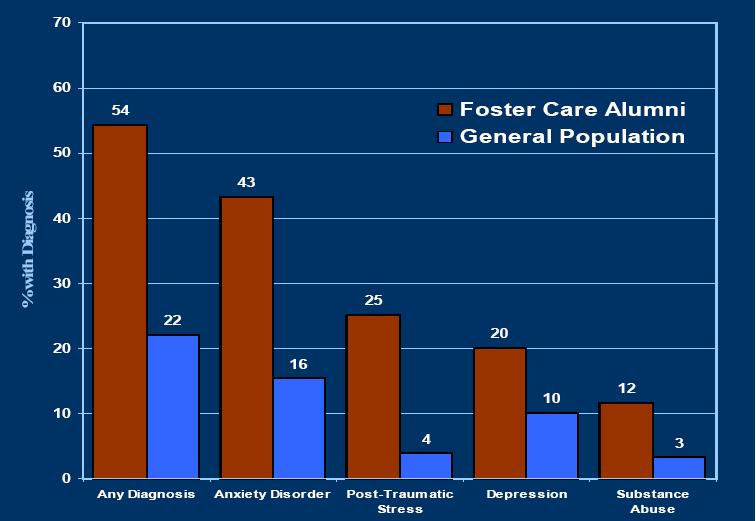
This final chart shows how foster care alumni are more likely to suffer from mental health disorders than the general population.

Friday, November 7, 2014

What is Mentoring?
Mentoring is a way of guiding a child in foster care in order for them to have a better future. There are many programs that help accomplish this goal, such as Big Brothers Big Sisters and Foster Care to Success (FC2S). Foster youth planning to attend college are often at a disadvantage. Many of them are the first of their families to graduate high school and even have the desire to attend college. Due to the fact that foster kids move often and attend many different schools, they are less prepared for the difficulty of college-level work. Also, many of them are trying to accomplish this alone or do not have any connections with caring adults.

Big Brothers Big Sisters is a support program that helps to shape a child's future for the better by empowering them to succeed. Through this program, people volunteer to spend time with kids who do not have strong support from families at home. They can help by giving advice and inspiration. There are 21,000 boys waiting for a Big Brother, which is double the amount of girls waiting for a Big Sister. The Big meets with the Little a few times a month. This program is trying to help children avoid risky behaviors and help them improve their self-confidence. They also try to provide success in education. They try to encourage children to set higher goals for high school and college, improve their confidence in themselves, and help them have stronger relationships with their families. They focus this program to those who need the most help, such as kids coping with parental incarceration. They operate in 370 communities across the United States and target the kids who could benefit most from their program.


FC2S is a non-profit academic success program working to set up college funds for foster youth. They have been mentoring students since 1981, and currently do this through a web portal. They match kids with volunteers who are interested in their lives and education. The goal of the academic success program is to provide students with the encouragement and guidance they need to do well academically and personally. This works by coaches making a one-year commitment to support three to four students with at least weekly communication, generally consisting of one to three hours a week. Approximately 5,000 students are helped by Foster Care to Success a year. They provide 24/7 support, always being open to phone calls. Every student in their program receives financial assistance, mentoring, career coaching, care packaging, and just attention in general from an adult who cares. 61% of the scholars from this program graduate within five years, which is a percentage higher than that of the overall U.S. population. Without programs like these, less than 10% of foster youth graduate college.


“Those foster youth who achieve success can generally point to one or two special adults who have supported them along the way. Along with social services, school and community resources and support, studies show that a stable relationship with a caring adult can make all the difference.”
- Eileen McCaffrey, Executive Director of Foster Care to Success.